


You’ve no doubt heard the saying, “If you want to make God laugh, just tell him your plans.” Perhaps you’ve had personal experiences of this in your life, as I certainly do in mine. How many times have I dreamed or envisioned what I wanted to do, or how I thought it should happen, and then, surprise! Reality has a way of serving up complications, obstacles, and presents paths forward that never would have occurred to us, doesn’t it?
I remember, for instance, coming out of my doctoral studies with grandiose plans for how I wanted to put my new degree to work, and was enjoying all kinds of interesting and enticing offers that appealed to me from large, prestigious universities. But when I was asked by my superior to return home to my small Alma Mater and to spend several years giving back to the place that had inspired my vocation, I felt initially so crushed. There was no clear fit for me. I wanted to go somewhere new, to a bigger and more exciting city where I could spread my wings.
It was only with time that I discovered that my little college was exactly where I was supposed to be, and that in fact, it wasn’t about me or what I wanted for myself, to enhance my self image and promote my achievement. Or at least it wasn’t about these personal desires alone. What I discovered was the way God was calling me beyond myself, to be of service, to be taken out of my comfort zone in ways I couldn’t have anticipated, to come to love the people and the place, and to find my energies directed in ways that God desired of me. It turned out to be all better than I could have imagined, and it was so hard to say goodbye when it finally came time for me to leave many years later.
Why do I share this personal story? Somehow, the bigger story of salvation history defies anything resembling people’s “vision boards,” or a corporate strategic plan. It is filled with disappointments, dreams deferred, and surprises. It is populated with unlikely protagonists, and perfectly imperfect conditions, marked by risk and low likelihood of success. The history of salvation is so improbable that it in fact staggers our human imagination, our often comfort centered and self-referential plans for ourselves and those we care about.
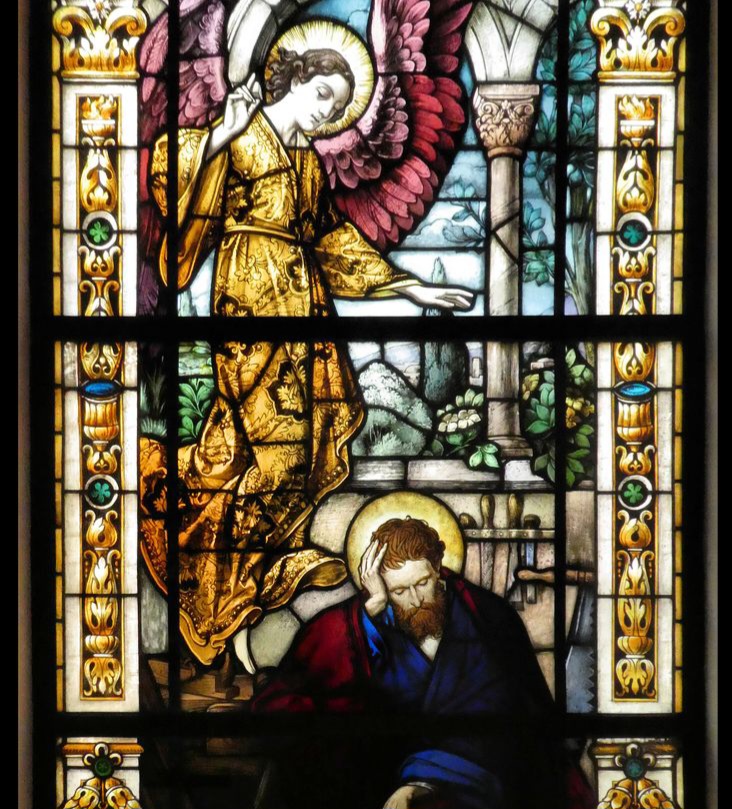
Yet, in God’s version of reality, the one he conveys to Joseph in this dream, the plan involves a savior who does not follow his own agenda, but surrenders himself to his Father’s vision. The Father’s plan will not indulge Joseph’s self-image, his social propriety or his humble hopes for a quiet, uneventful life with his new bride. It will involve accepting public shame and humiliation for marrying a woman found to be with child out of wedlock. The plan will include rejection and small town rumors about being a “cuckold.” Then a long and difficult journey with his pregnant wife, forced to comply with the Roman empire’s demand for census. When Joseph arrives in the city of his own family, no one wants to take him and his new wife into their home. He must have felt a sense of shame and failure, not being able to provide proper shelter or safety for his wife at the very moment she gives birth. The “plan” will include a terrifying flight with his family as refugees, running with his wife and newborn from the murderous persecution of a cowardly and jealous tyrant…
You get the idea.
How could this be the “plan” for salvation history? And haven’t we all asked ourselves, “how could this be God’s will?” It is so natural to wonder and question. When we face disruptions, disappointments, or unexpected obstacles, how do we respond?
When we turn our attention back to Joseph, this righteous, good, and humble man, are we not amazed at the way he awakens from the dream, and does exactly what the Angel of the Lord directed him to do? How could it be so easy? Maybe in reality, the story simplifies what actually happened, and skips past the inner process that Joseph went through, sorting through the shock, the disappointment and fear, and the way he eventually came to accept and embrace this new path, his strange and overwhelming role. Like Mary, Joseph too came to say, “yes, Lord, not my will but yours. Let it be done through me as you direct.” And how could the story of salvation have happened without Joseph, in his own humble, quiet way, accepting a plan that he never would have imagined for himself?
You may be wondering, “wow, this feels so heavy! Where’s the joy, the hope, the reason for celebration?” In fact, when we look closer, we come to understand that just as Jesus was born to reveal his Father’s love and desire for our human flourishing, Joseph reveals that the flourishing that God has in mind for us isn’t the same as what the world would prefer. The Father’s plan is not about comfort and ease, but rather, it is about living and loving one another with joyful generosity, compassion, mercy, and reverence for life. It is about living with humility and audacity with the right proportion and regarding the right things, and discerning the Father’s will, rather than clinging to our own.
As we finish the Advent journey and review our call to conversion over these past four weeks in anticipation of our celebration of the Incarnation, where do we acknowledge God inviting us to surrender our plans and instead welcome him into our lives? What grace do we require, like Joseph, to say a “yes” that carries us beyond our initial hesitation, fears, or resistances? How are we in our own, ordinary lives, invited to take our role in salvation history, not as messiahs, but as disciples who trust in God’s capacity and desire to save?
As the Discerning Leadership Team takes a break to be with family, community, and friends, we ask for your prayers for our mission, and we promise our prayers for you and yours for a peaceful, happy, and blessed celebration of Christmas.
With fraternal affection,