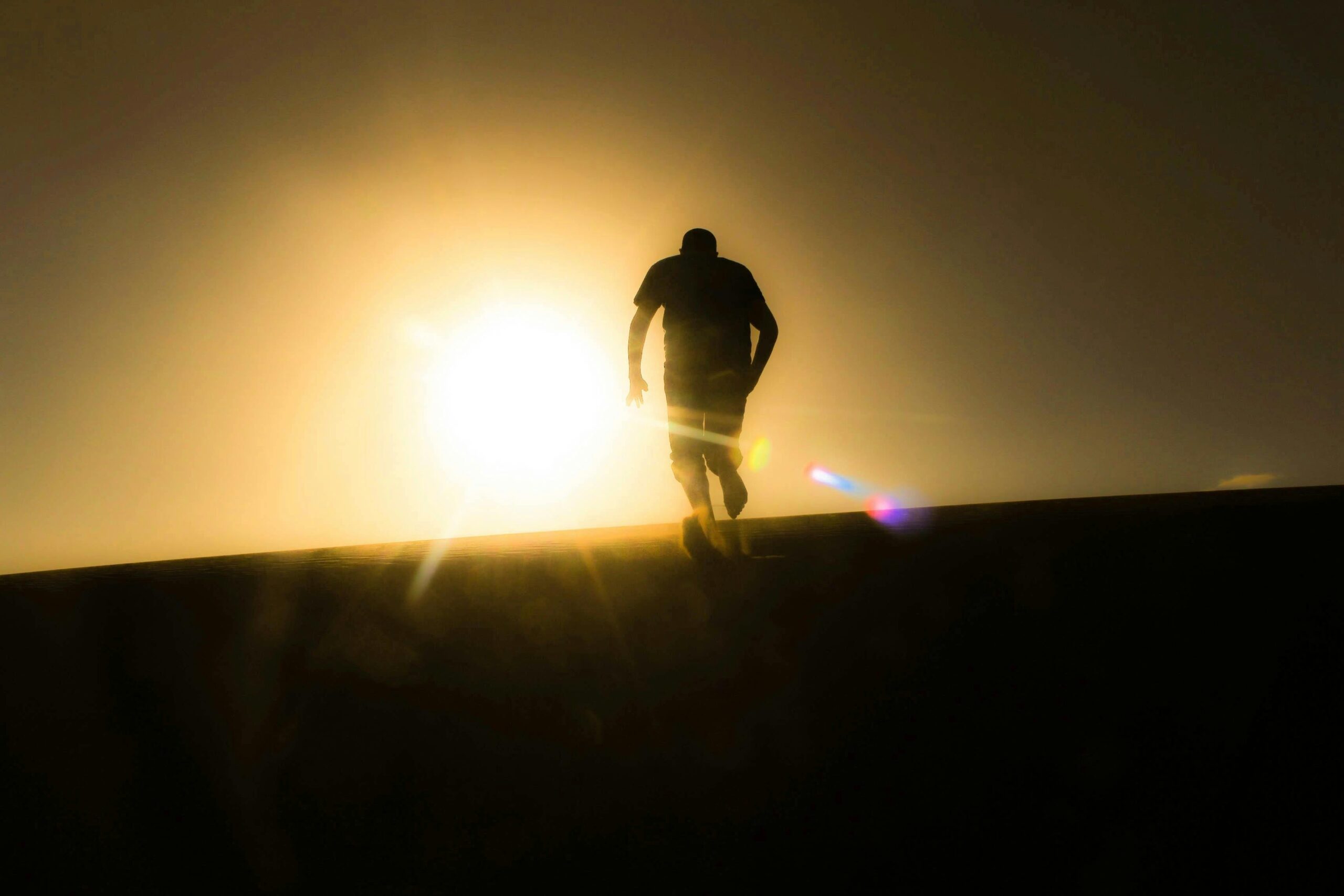


When I was between the ages of three and six, I had a ritual that I observed much more carefully than brushing my teeth. No matter what assurances I had from my parents, before I got into bed at night, after saying my prayers, I would get down on hands and knees and peek under the bed. I hope I’m not alone in recalling this kind of final “safety check” before going to sleep? Did you share my fear that if you didn’t check under the bed, you might find yourself surprised by some terrible monster that had stealthily gone into hiding when no one was looking? I’ll spare you my embarrassment now in all the other anxieties that I had as a kid, but certainly the fear of what was waiting in the dark is the most memorable.

And no wonder, right? From our earliest days as a species, before we learned to harness fire, the darkness was a place of danger. Not only the darkness of night, but the shadowy recesses of caves where we lived once upon a time, the places in the forest where the tree canopies were so dense that little sunlight shone, the mountain paths where we could have been taken by surprise by enemies waiting behind rocks to attack… you get the idea. The fear of the dark is primal, archetypical, and universal.
I recall once hearing a story by Robert Fulgham, the author of All I Really Needed to Know I Learned in Kindergarten. He described a simple game that poor children played with shards of a broken mirror, using them to reflect sunlight into the dark places they found as they explored junkyards, old abandoned places, and empty (hopefully) caves. It’s hard to explain how or why this little story has stayed with me over the years. Perhaps it made an impression because it is something I can imagine doing as a kid. But over the years, it has come to mean so much more.
I’ve come to believe that leadership is very much about shining light into dark places.
In the Gospel today, we hear repeated the ancient prophecy from Isaiah:
Land of Zebulun and land of Naphtali,
the way to the sea, beyond the Jordan,
Galilee of the Gentiles,
the people who sit in darkness have seen a great light,
on those dwelling in a land overshadowed by death
light has arisen.
The Gospel writer refers to the way that Jesus fulfills this prophecy as he moves from Nazareth, where he grew up, to Capernaum, the fishing village on the Sea of Galilee. On another level of meaning, he is describing, ironically, how Jesus moves from the darkness of his own obscurity- his “hidden life,” to the light of his public ministry, where he will shine the light of his compassion, his wisdom, and the consolation of the Good News. Like the children playing with the shards of mirror, Jesus comes to reflect the light of his Father’s love to people living in the darkness of ignorance, fear, and oppression. Ultimately, Jesus, the Messiah, reveals the Father’s will and promise to give the people a life that does not end in death, as long as they renounce sin, repent, and turn toward the light of his love.
Importantly, Jesus rarely uses fear to motivate this repentance, but rather, the positive and attractive vision of wedding feasts, a peaceable Kingdom where all are welcome, especially those currently suffering in any way from sickness, poverty, or injustice. As the Light coming into the world, Jesus offers a contrary wisdom that reveals his Father’s preferential love for those who are vulnerable, hidden, and marginal. He draws people toward his light by radiating his Father’s hospitality and mercy, by offering hope that no evil or malice can hope to overcome, even through violence. His light is clear, gentle, clarifying… it is the light of his Father’s love for his Creation. He is himself like the bright shard of mirror, shining God’s radiance into the dark places and “turning the night into day.”
I could go on, but I would start sounding like lyrics from so many of our liturgical songs from the 70’s and 80’s!
In contrast to the way we understand the mission, leadership, and ministry of Jesus, it is hard not to see so many figures in positions of authority doing just the opposite. They capitalize on our primal fears of darkness, manipulating the anxieties we have about what is unknown or uncertain, about what waits for us behind the doors and in the dark corners of the future. They provoke and stoke our fears for our security, belonging, or worth. Instead of shining the reflected light of others, they make themselves the focus of attention, and claim to be the true sources of power, offering false promises of protection, order, or direction. Again, I could go on, but would rather not get depressed today.
As leaders who understand themselves as disciples of Jesus, we too have received a mission to shine the reflected light of God into the dark places, to educate, liberate, heal, reconcile, encourage, and serve. In these times, beset by so many reasons for fear, it is our responsibility to be steady, to regulate our anxieties so that we can help others to find their footing and balance, not simply reacting, or more dangerously, regressing into violence. Carrying our shards of broken mirror, we do not have to be ourselves the answer to everyone’s fears, but like Jesus, we can reflect the sunlight of God’s love, God’s promise of life beyond death.
If you, like me, sometimes find yourself spiraling into negative, fearful thoughts about the times we’re living in, let alone the future, this is precisely the moment to check ourselves- not with naive “happy thoughts,” but by returning again and again to the promise God makes us in his Son: “a light has risen,” and his light will not be overcome.
With you on the road, together,