I don’t know about you, but these days, I find my attention drawn to places where war is raging and to the people affected. It feels like a stretch to celebrate Easter and proclaim the hope of the resurrection even as innocent people are suffering and dying at the hands of indiscriminate world powers. It would seem to require a kind of cognitive dissonance, or a dissociation from our feelings and empathy, to go on as if these entirely avoidable tragedies weren’t happening.
Because our dear friend and colleague on the DL team lives in Beirut, we are naturally preoccupied for her safety, her family, and the wellbeing of the people of Lebanon. We can’t help but pray for the end to the violence among the warring parties: the US, Israel, Iran, and all their proxies.
Right now, it’s hard to imagine how peace will emerge in the context of the Middle East, between Russia and Ukraine, within Myanmar, Sudan, and among many other nations and peoples who are currently in conflict. These wars will undoubtedly lead to generations of trauma and repeated cycles of vengeance and retribution. It’s not easy to imagine a future on the other side of such violence, driven by old animosities, ideology, and the politics of “super powers.”. To imagine a positive, peaceful future requires a kind of faith in humanity’s capacity to overcome its shadows, and a hope for order and resolution to emerge from chaos. It can feel like a “bridge too far.”
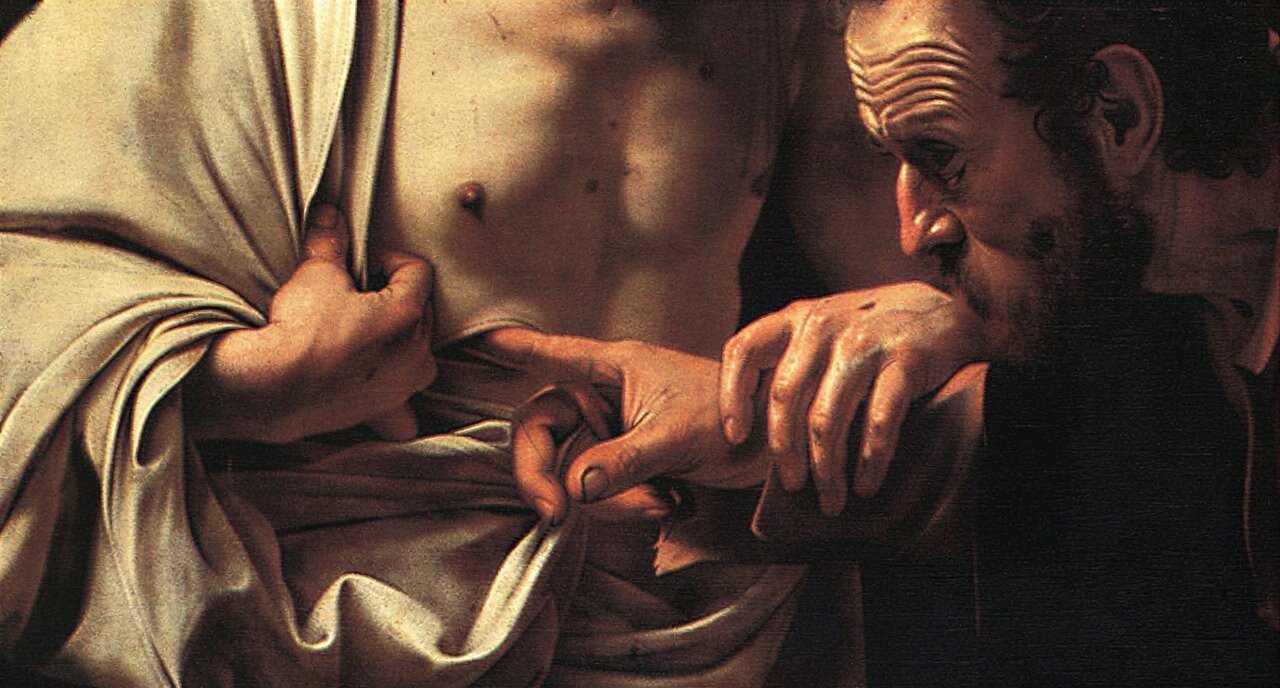
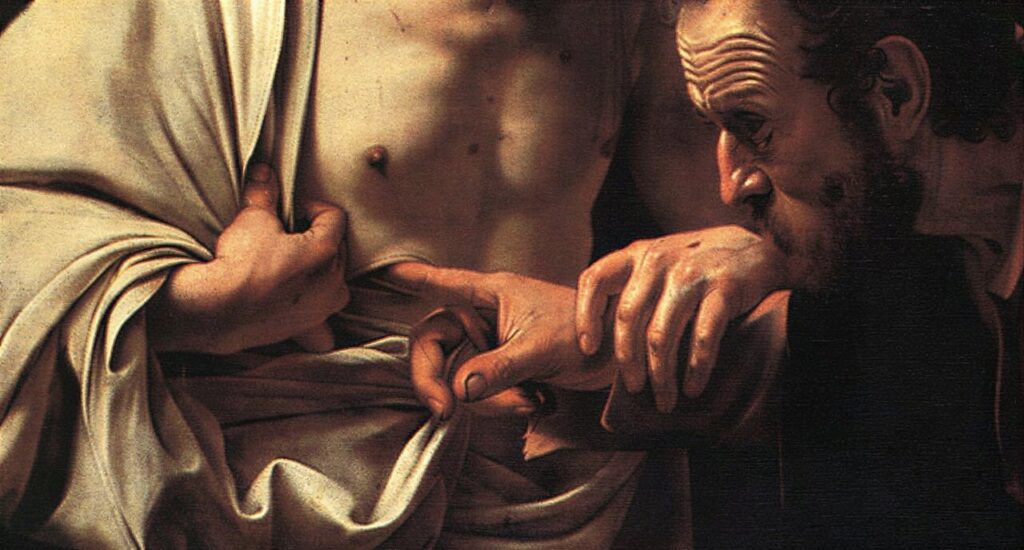
In a strange way, there is a parallel with Thomas’ inability to imagine a future beyond what had happened to Jesus, who innocently suffered terrible violence due to circumstances of politics, ideology, and age-old hatreds. How could Thomas believe this story that seemed “too good to be true,” that Jesus was alive after all that? When situated in the midst of such painful and traumatic circumstances, it would be literally beyond belief to accept such good news. What happens when we simply cannot find any faith or hope within us?
In truth, faith is nothing that we can manufacture or make happen, as if by our own effort or willpower. While Jesus many times affirms the faith of those who place their trust in his ability to heal them, he is not affirming them for magical thinking, let alone for some act of will or personal merit. Rather, Jesus is affirming them for a trust that they have placed in God to take action, to be effective in their lives and circumstances, despite all evidence to the contrary.
This is not a function of people’s willpower, but rather, of their willingness to believe in God’s presence, agency, and power. It is this willingness to believe rather than willpower that Jesus himself models when he submits to the Paschal mystery. This was an act of ultimate submission and surrender. It required him to set aside his fear of suffering and own natural preference to live, to accept instead his Father’s will.
We know that his surrender was neither peaceful, nor easy. It was rather the fruit of a terrible agony in the garden of Gethsemane and a radical trust in his Father’s promises of a faithful love that would not end in death.
In light of this, Jesus understands that for each of us, abandoning our need for control, comfort, or certitude is nothing to be taken for granted. To believe, to place faith in someone or something greater than ourselves is a profound act of humility, of trust, and vulnerability. It can feel at first like a terrible sacrifice and loss.
This brings us back to the Upper Room, where Jesus was tender with poor, heartbroken Thomas, who always wanted to know and understand everything, Thomas who had the gift of a sharp mind, logic, and practical intelligence; Thomas, who could make no sense of what he had just experienced in the suffering and death of his teacher and friend. He was helpless despite his desire to believe, because no reasoning or act of his own will was sufficient.
In his compassion, it was Jesus who took the initiative to go to his dear friend and to share the consolation that his Father’s promise to him was fulfilled. It was Jesus who restored their relationship through reconciliation and the gift of his peace. It was Jesus’ faithfulness that healed Thomas of his doubt and despair.
He didn’t ask Thomas to do something impossible, to perform some superhuman act of faith. He simply invited Thomas to surrender his doubt, his pain and grief. Jesus asked Thomas to touch his wounds, to see and believe, knowing that this would mean letting go of his attachments to reason and logic. He invited Thomas to drop his self-protective defenses and accept the reality that in fact, life goes on, that love is stronger even than death. It would require him to let go of cynicism, denial, or stubborn hard heartedness. It would require Thomas to release his shame for abandoning his friend, and to accept mercy, forgiveness, and peace.
Finally, it would call on him to let go of the conventional idea that he must place more faith in God, and instead accept the more radical belief that God has faith in him, that God would be faithful to him, no matter what.
Sit with that for a moment. What would it mean to experience God’s faithfulness and faith in us at such a moment?
This created a new foundation for Thomas’ humility and for his courage. This was the case for all the disciples in the Upper Room. And it is true for us as well.
I consider this one of the greatest mysteries. God is faithful to us no matter what, and has faith that we can outgrow our limits and shadows. In the Risen Jesus and the stories of these disciples, God reveals that through his grace and mercy, we can learn and imitate the Way of his Son. Like them, we will never be anything but perfectly imperfect. But we can unlearn many of our troubling tendencies, renounce violence and retribution, and rededicate ourselves to reconciliation and work for peace. With God’s faithfulness to us and God’s faith in us, we can become better than we currently are. What a gift of mercy and grace!
As we celebrate this Divine Mercy Sunday, and reflect on this profound encounter between the Risen Christ and Thomas, where do we experience the resonances of this Gospel passage in our own lives? Have we experienced God’s faithfulness to us despite our own infidelity and imperfection? Have we ever experienced God’s faith in us to show up as our better selves?
With you on the road,